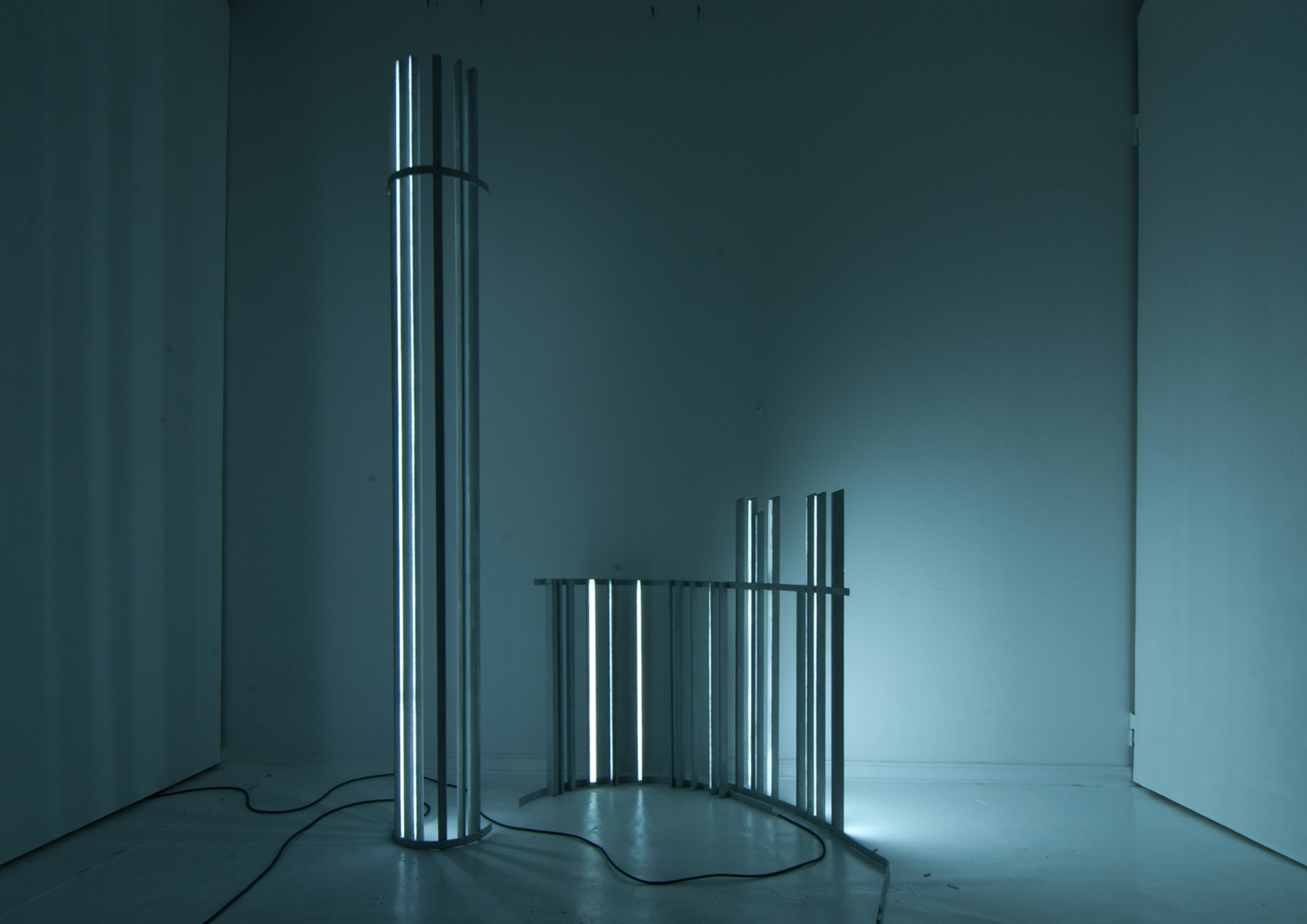
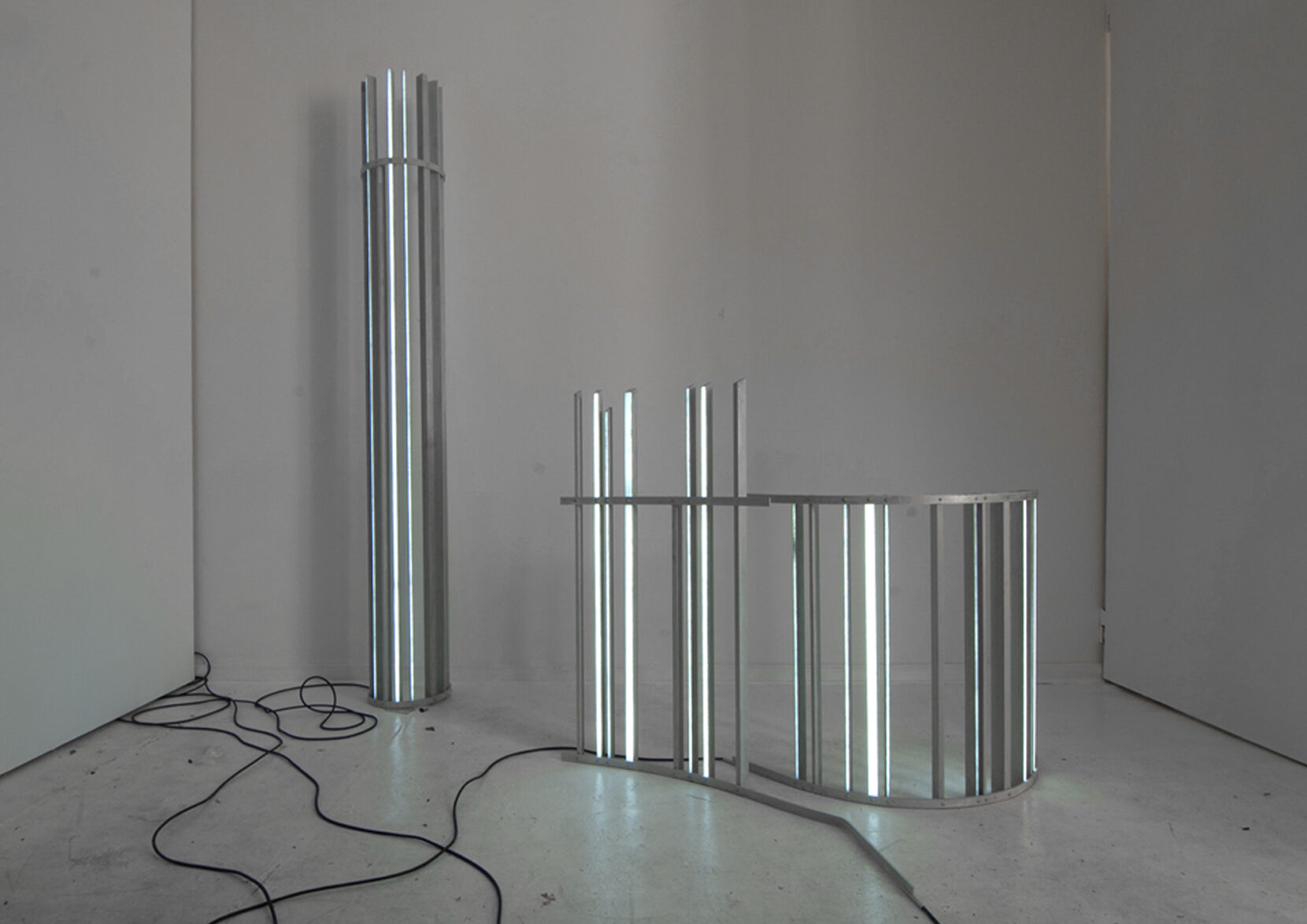
coded fence
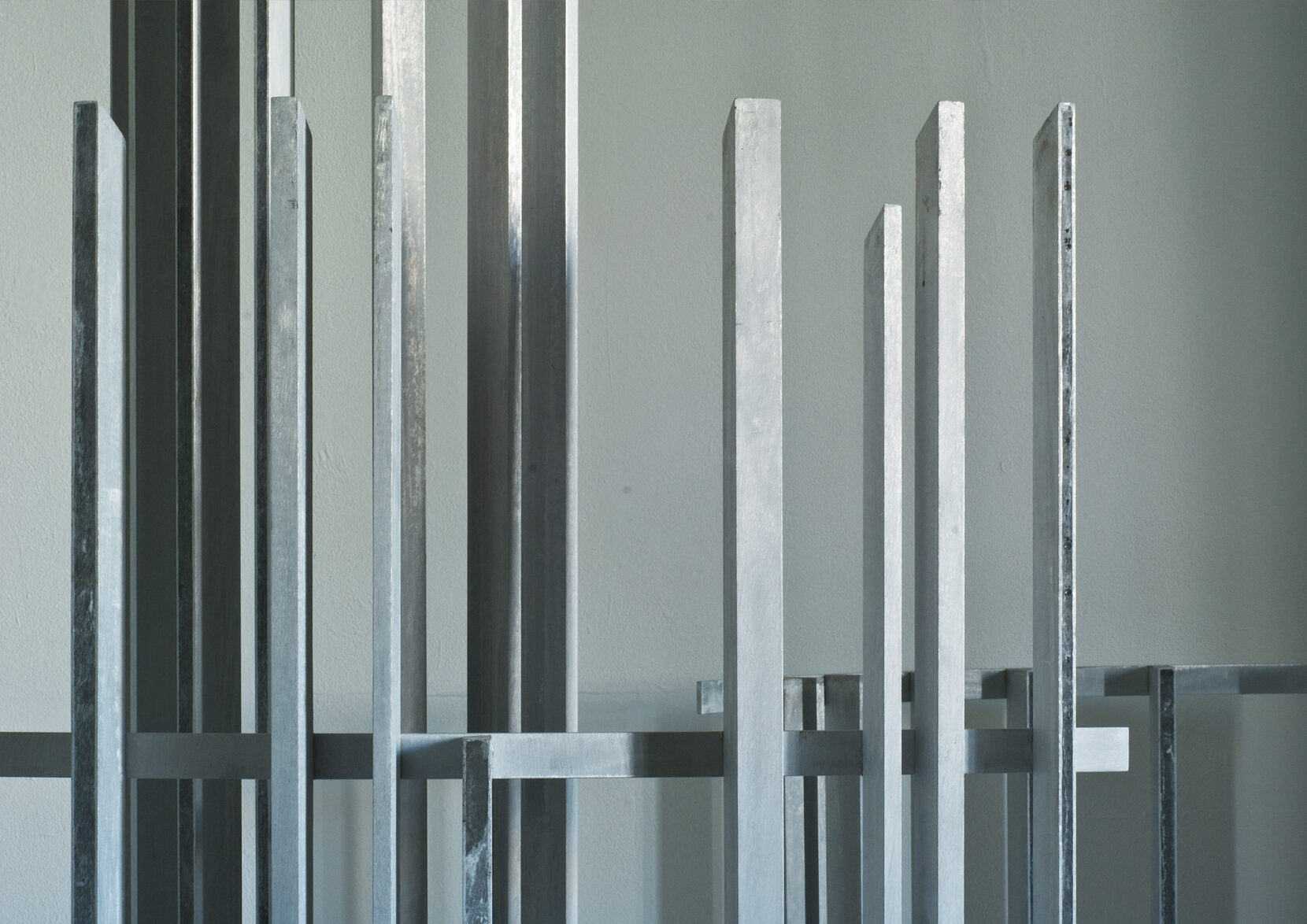
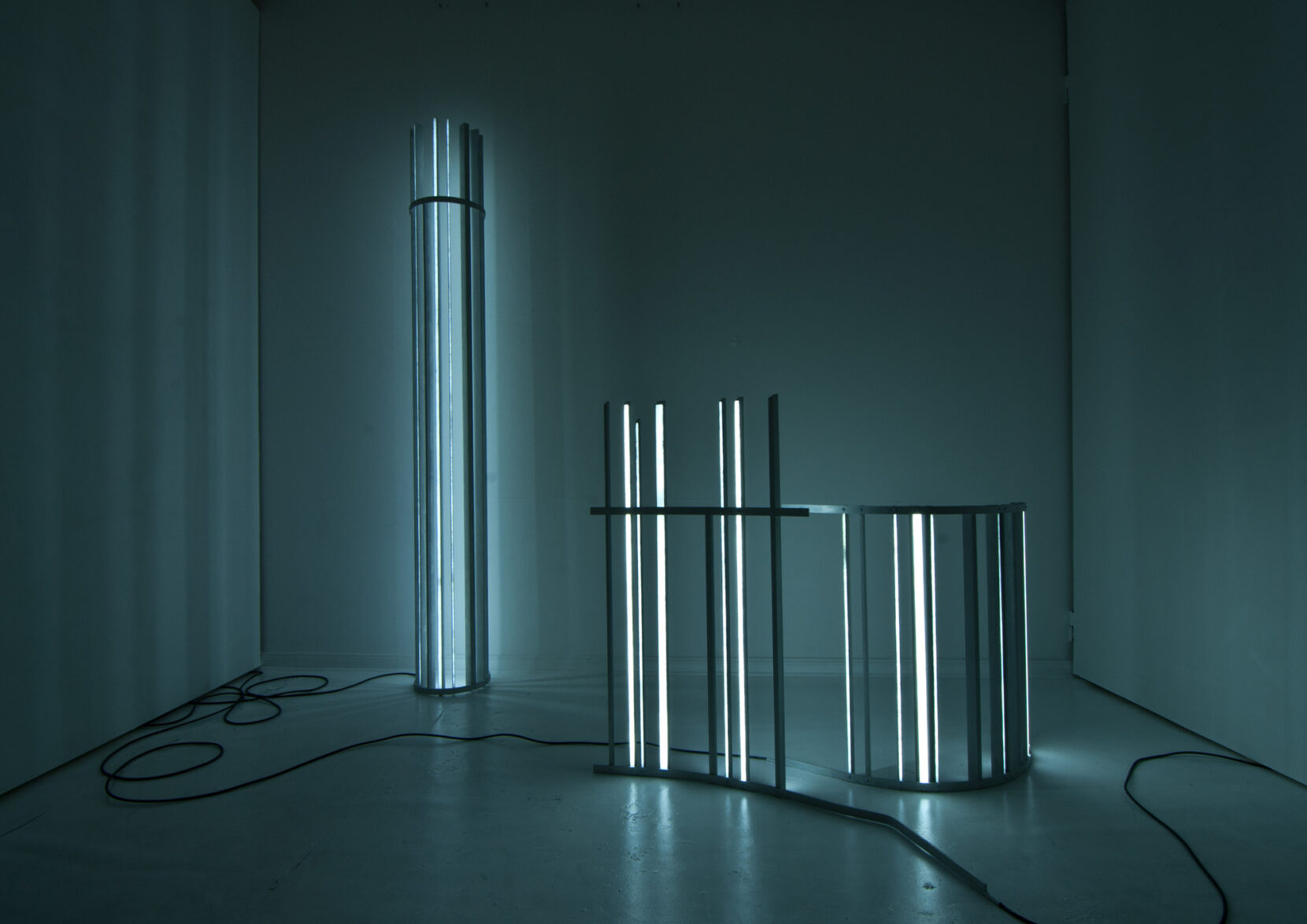
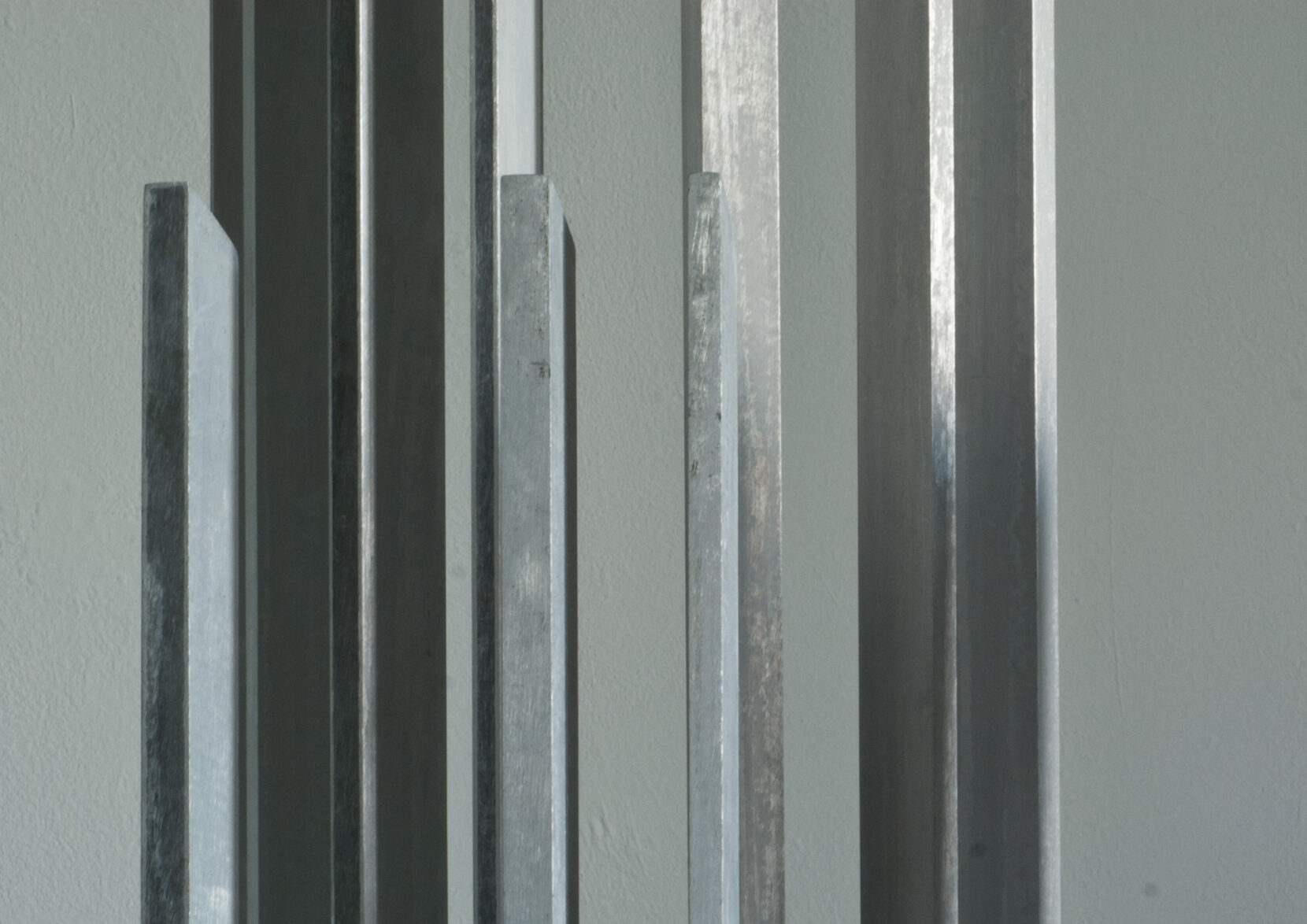
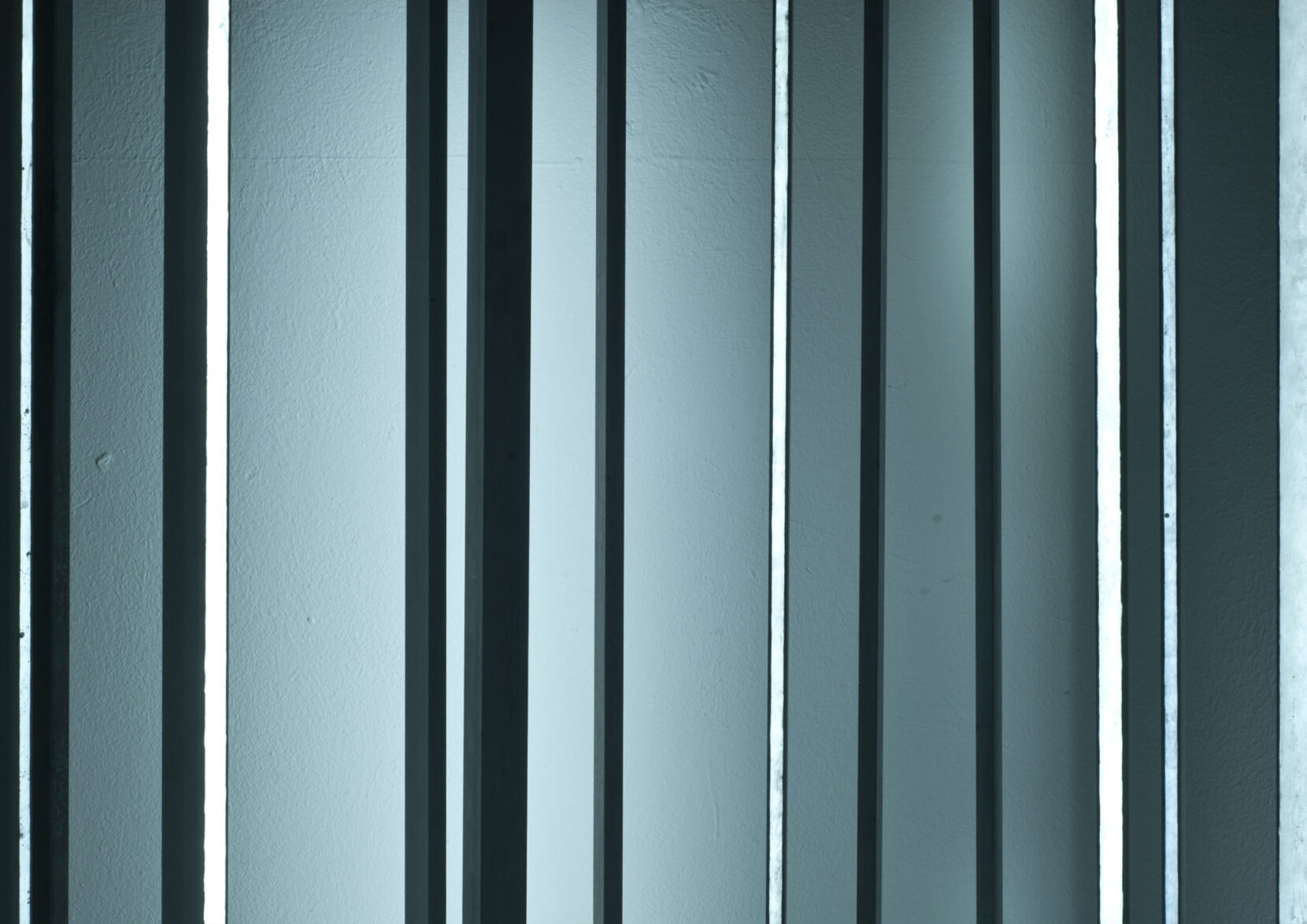
(2019) aluminum, resin, recycled glass, led (100 x 85 x 5/38 cm / 127 x 118 x 5/34 cm / 35 x 252 x24 cm)
Martin Heidegger: The boundary is not that at which something ends, but that from which something begins to be.
Jean-Jacques Rousseau: The first man who, having enclosed a piece of ground, took it into his head to say, “This is mine,” and found people simple enough to believe him, was the true founder of civil society.
Michel Foucault: Space is fundamental to every form of power.
Fences are more than functional boundaries. Their design (coding) encapsulates social, economic and cultural statements. As the first gesture to the outside world and as a means of self-expression – between invitation and isolation – they mark not only ownership but also social status: trust and belonging or distance and exclusivity.
Politically, they reflect attitudes towards security, community and control, and in private they refer to social discourses that are also evident in public.
Last but not least, fences embody the spirit of the times. Their forms follow aesthetic trends and artistic ideals, from ornamental representation to minimalist reduction. In this way, fences become silent commentaries on how a society understands itself and where it draws its boundaries.
Martin Heidegger: Die Grenze ist nicht das, wobei etwas aufhört, sondern das, von wo aus etwas sein Wesen beginnt.
Jean-Jacques Rousseau: Der erste, der ein Stück Land umzäunte und auf den Gedanken kam zu sagen: Dies gehört mir, und Leute fand, die einfältig genug waren, ihm zu glauben, war der wahre Begründer der bürgerlichen Gesellschaft.
Michel Foucault: Raum ist grundlegend in jeder Form der Machtausübung.
Zäune sind mehr als funktionale Abgrenzungen. In ihrer Gestaltung (Kodierung) verdichten sich gesellschaftliche, ökonomische und kulturelle Aussagen. Als erste Geste nach außen und als Mittel der Selbstdarstellung – zwischen Einladung und Abschottung – markieren sie nicht nur Besitz, sondern auch soziale Stellung: Vertrauen und Zugehörigkeit oder Distanz und Exklusivität.
Politisch spiegeln sie die Haltungen zu Sicherheit, Gemeinschaft und Kontrolle wider und verweisen im Privaten auf gesellschaftliche Diskurse, die sich auch im Öffentlichen zeigen.
Nicht zuletzt tragen Zäune den Zeitgeist in sich. Ihre Formen folgen ästhetischen Strömungen und künstlerischen Idealen, von ornamentaler Repräsentation bis zu minimalistischer Reduktion. So werden Zäune zu stillen Kommentaren darüber, wie eine Gesellschaft sich selbst versteht und wo sie ihre Grenzen zieht.